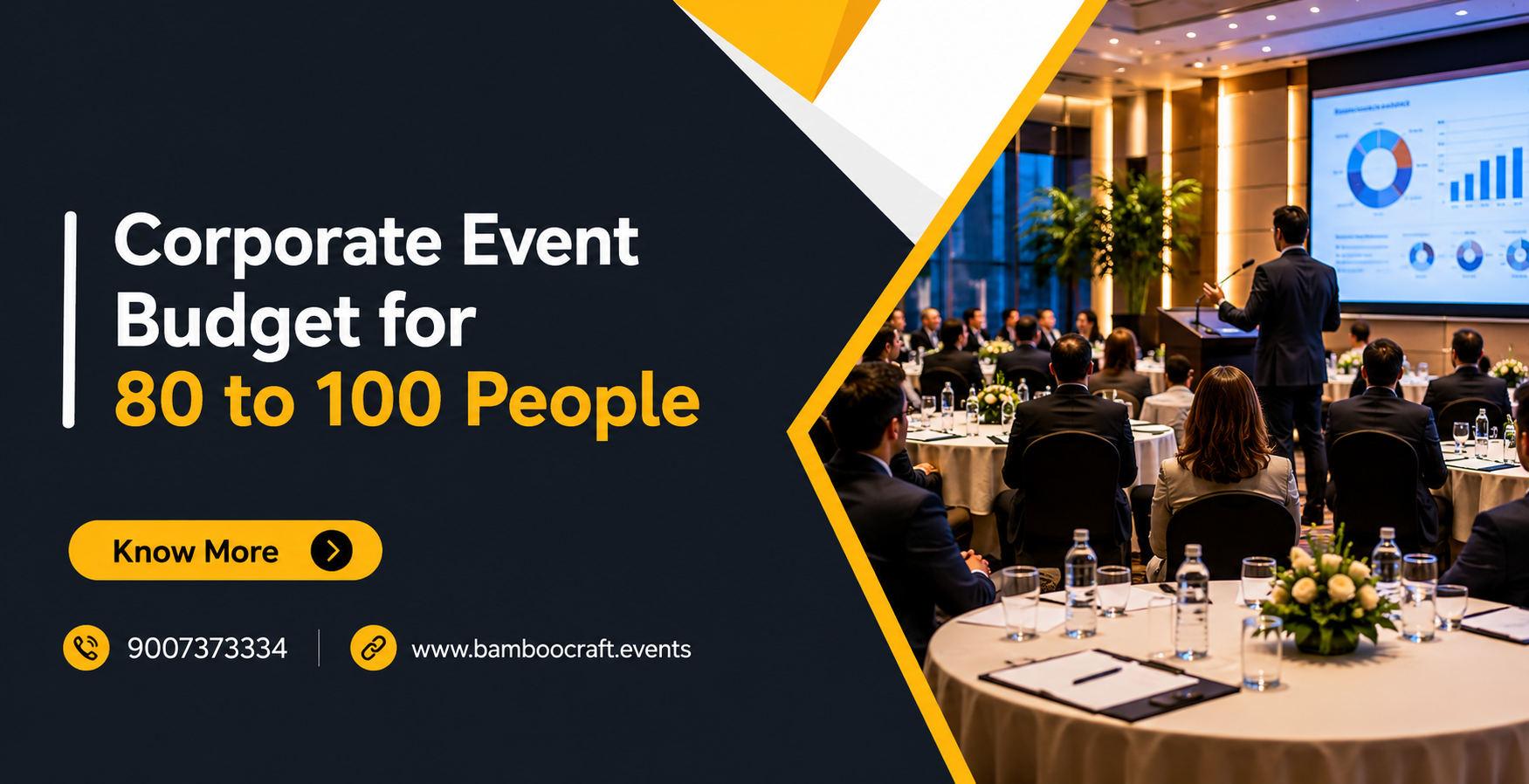
Planning a corporate event requires careful budgeting to ensure a successful experience without overspending. Whether you are organizing a business conference, annual corporate gathering, employee engagement program, product launch, networking event, or company celebration, understanding how to calculate the budget is one of the most important aspects of event planning.
Many businesses often ask, “How much should we budget for a corporate event with 80 to 100 attendees?” The answer depends on several factors, including the event type, venue, catering, technology requirements, branding, entertainment, and logistics. A well-structured budget helps companies manage expenses effectively while delivering a professional and memorable experience for attendees.
At Bamboo Crafts Events, we believe that a successful corporate event starts with a clear financial plan. In this guide, we will explain how to calculate the budget for a corporate event with 80 to 100 guests and the key factors that influence overall costs.
Purpose of the Event
Before calculating the budget, it is essential to define the purpose of the event. Different types of corporate events require different levels of investment.
For example, a simple employee appreciation gathering may require a smaller budget compared to a product launch event that involves extensive branding, media coverage, and advanced technical setups. Similarly, a business conference may require additional spending on audiovisual equipment, guest speakers, and networking spaces.
Understanding the event objective helps determine where the budget should be allocated and prevents unnecessary spending on elements that do not contribute to the event’s goals.
Venue Costs: The Foundation of Your Budget
The venue is often one of the largest expenses in a corporate event budget. For an event with 80 to 100 attendees, the venue must provide adequate seating, accessibility, parking facilities, and a professional atmosphere.
Venue costs vary significantly depending on the location, event duration, facilities, and the reputation of the venue. Premium hotels and convention centers generally charge higher rates than banquet halls or business event spaces.
When calculating venue costs, consider what is included in the rental package. Some venues provide tables, chairs, basic sound systems, lighting, and event staff, which can reduce additional expenses. Comparing multiple venue options can help identify the best value without compromising quality.
Catering and Food Expenses
Food and beverages play a major role in the overall attendee experience. The catering budget depends on the type of event and the meal service required.
A half-day seminar may only require refreshments and snacks, while a full-day conference may include breakfast, lunch, tea breaks, and beverages. Evening corporate events may involve buffet dinners, cocktails, or customized menus.
To estimate catering expenses, determine the cost per guest and multiply it by the expected number of attendees. It is also wise to include a small buffer for unexpected guests or additional servings.
High-quality food service often leaves a lasting impression on attendees, making it an area where businesses should focus on value rather than simply choosing the cheapest option.
Audio-Visual and Technical Requirements
Modern corporate events rely heavily on technology. Presentations, speeches, video displays, and live demonstrations require reliable audiovisual equipment.
Budget calculations should include expenses for:
- LED screens and projectors
- Microphones and speakers
- Stage lighting
- Video recording equipment
- Technical support staff
- Internet connectivity
Technical failures can negatively impact an event’s success, so investing in professional audiovisual solutions is often necessary for corporate functions.
Branding and Event Design
Corporate events are an extension of a company’s brand identity. Therefore, branding and event design should be considered when calculating the budget.
Branding expenses may include:
- Stage backdrops
- Corporate banners
- Welcome signage
- Registration counters
- Standees and display materials
- Printed event materials
The level of branding depends on the event’s purpose. A product launch event may require extensive visual branding, while an internal corporate meeting may need only basic design elements.
Professional event design helps create a polished and memorable atmosphere that reflects the organization’s image.
Guest Registration and Event Management
Managing 80 to 100 attendees requires proper planning and coordination. Event management expenses often include registration systems, attendee badges, welcome kits, and support staff.
These elements help ensure a smooth experience for participants from arrival to departure. While registration-related expenses may seem minor individually, they can contribute significantly to the overall budget when combined.
Professional event management also improves efficiency and allows company representatives to focus on engaging with attendees rather than handling operational issues.
Entertainment and Engagement Activities
Many corporate events include entertainment or engagement activities to enhance the attendee experience.
Depending on the event type, expenses may include:
- Professional emcees
- Motivational speakers
- Live music performances
- Team-building activities
- Interactive workshops
- Award ceremonies
Including these elements in the budget from the beginning helps avoid unexpected expenses later in the planning process.
The right entertainment can increase attendee engagement and contribute to the overall success of the event.
Transportation and Logistics Costs
Transportation and logistics are often overlooked during budget planning. However, these expenses can have a significant impact on the final event cost.
Logistics-related expenses may include:
- Transportation for speakers and VIP guests
- Equipment delivery and setup
- Staff transportation
- Parking arrangements
- Storage and material handling
If guests are traveling from multiple locations, transportation planning becomes even more important.
Proper logistics management ensures that every aspect of the event runs smoothly and according to schedule.
Photography and Videography
Corporate events provide valuable opportunities for marketing and internal communication. Professional photography and videography help capture important moments and create content that can be used in future promotions.
Expenses may include event photography, highlight videos, interviews, and social media content creation.
Investing in professional visual documentation allows businesses to maximize the value of their event long after it has concluded.
The Importance of a Contingency Fund
No matter how detailed the planning process is, unexpected expenses can arise. Last-minute changes, technical issues, additional attendees, or weather-related challenges can affect the budget.
For this reason, event planners typically allocate a contingency fund as part of the overall budget.
A contingency reserve provides financial flexibility and helps address unforeseen situations without disrupting the event.
Including contingency planning is considered a best practice in professional event management.
Creating a Comprehensive Budget Sheet
The most effective way to calculate a corporate event budget is to create a detailed budget sheet that includes every expense category.
A comprehensive budget should cover:
- Venue rental
- Catering and beverages
- Audiovisual equipment
- Branding and décor
- Registration management
- Entertainment
- Transportation and logistics
- Photography and videography
- Event staffing
- Contingency expenses
Listing all expected costs helps businesses gain a clear understanding of the total investment required and identify areas where savings may be possible.
How to Optimize Event Costs
Cost optimization does not mean compromising quality. Instead, it involves making strategic decisions that maximize value.
Early planning is one of the most effective ways to reduce costs. Venues and vendors often offer better pricing for advance bookings.
Bundled event packages can also help reduce expenses by combining venue, catering, décor, and management services into a single solution.
Accurate guest count forecasting, vendor negotiations, and prioritizing essential elements can further improve budget efficiency.
Working with experienced event planners often results in better resource management and more cost-effective event execution.
Why Professional Event Planning Makes a Difference
Corporate events involve numerous moving parts, and managing them internally can be challenging. Professional event planners bring industry expertise, vendor networks, and project management skills that help control costs while maintaining quality.
An experienced event management company can identify potential risks, negotiate better rates, coordinate vendors, and ensure every aspect of the event aligns with business objectives.
This not only saves time but also helps organizations achieve a higher return on their event investment.
Conclusion
Calculating the budget for a corporate event with 80 to 100 attendees requires a strategic approach that considers every aspect of the event. From venue selection and catering to technology, branding, logistics, and contingency planning, each component contributes to the overall cost.
A well-planned budget helps businesses avoid unexpected expenses, allocate resources effectively, and create a professional experience that meets organizational goals. Rather than viewing event expenses as a cost, successful companies recognize corporate events as valuable investments in employee engagement, brand building, client relationships, and business growth.
Bamboo Crafts Events specializes in planning and managing corporate conferences, annual meetings, product launches, employee engagement programs, and business events of all sizes. With expert budgeting, creative planning, and flawless execution, we help organizations create memorable corporate experiences while maximizing value from every investment.